By STEPHEN KINZER

OON
after the C.I.A. installed him as president of Guatemala in
1954, Col. Carlos Castillo Armas visited Washington. He was
unusually forthright with Vice President Richard M. Nixon.
"Tell me what you want me to do," he said, "and I
will do it."
What the United States wanted in Guatemala — and in Iran,
where the C.I.A. also deposed a government in the early 1950's
— was pro-American stability. In the long run, though, neither
Colonel Castillo Armas nor his Iranian counterpart, Shah
Mohammed Reza Pahlavi, provided it. Instead, both led their
countries away from democracy and toward repression and tragedy.
How did this happen? From the perspective of half a century,
what is the legacy of these two coups?
Several dozen scholars, including leading experts on Iran and
Guatemala, gathered in Chicago this month to consider those
questions. Their conclusions were grim. All agreed that both
coups — the first that the C.I.A. carried out — had terrible
long-term effects.
"It's quite clear that the 1953 coup cut short a move
toward democracy in Iran," said Mark J. Gasiorowski, a
historian at Louisiana State University who began studying that
coup in the 1980's. "The United States bears responsibility
for this."
Iranians wrote a constitution and elected a parliament early
in the 20th century. Their progress toward democracy stopped
after the Pahlavi dynasty took the throne with British help in
1921, but resumed after World War II. By the time of the 1953
coup, Iran was more free than at any time before or since.
The verdict on Guatemala was even harsher. Within a few years
after the 1954 coup, Guatemala fell into a maelstrom of
guerrilla war and state terror in which hundreds of thousands of
people died.
"The C.I.A. intervention began a ghastly cycle of
violence, assassination and torture in Guatemala," said
Stephen G. Rabe, a historian from the University of Texas at
Dallas and author of "Eisenhower and Latin America: The
Foreign Policy of Anticommunism."
"The Guatemalan intervention of 1954 is the most
important event in the history of U.S. relations with Latin
America," Mr. Rabe said. "It really set the precedent
for later interventions in Cuba, British Guiana, Brazil and
Chile. The tactics were the same, the mindset was the same, and
in many cases the people who directed those covert interventions
were the same."
President Harry S. Truman authorized creation of the C.I.A.
in 1947, and during his administration it carried out covert
actions. Truman refused, however, to authorize the overthrow of
governments. That changed when Dwight D. Eisenhower became
president in 1953.
On Aug. 19, 1953, Prime Minister Mohammad Mossadegh of Iran
became the first victim of a C.I.A. coup. Ten months later, on
June 27, 1954, President Jacobo Arbenz of Guatemala became the
second.
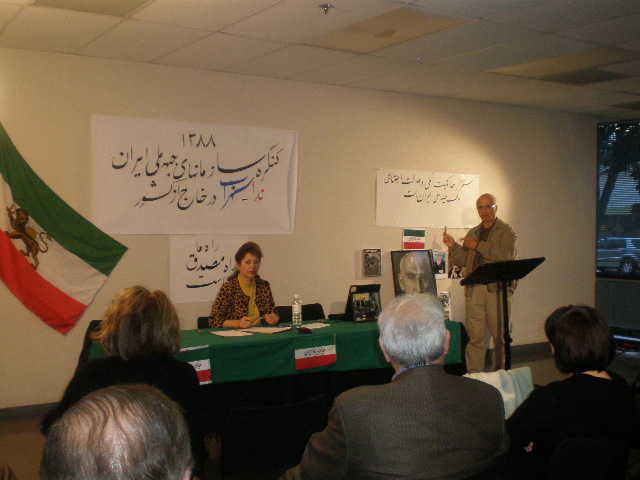
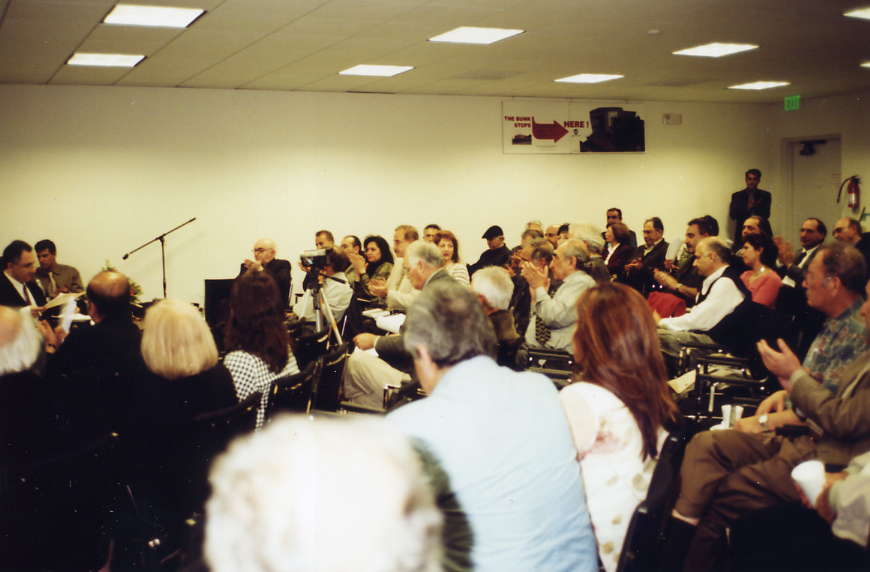
The recent Chicago meeting, at Northeastern Illinois
University, was the first time scholars have considered these
two coups together. Some of the participants have taken
anti-interventionist positions in the past, but all are
respected scholars in their fields. Several have devoted years
to studying either the Guatemala coup or the one in Iran. Some
now see them as constituting a single historical moment, the
beginning of an era of C.I.A.-backed coups around the world.
Eisenhower ordered these coups for a combination of economic
and political reasons. Elected Iranian and Guatemalan leaders
had challenged the power of large Western corporations, Mr.
Mossadegh by nationalizing the Anglo-Iranian Oil Company and Mr.
Arbenz by forcing the United Fruit Company to sell some of its
unused land for distribution to peasants. American officials
charged that both were leading their countries toward Communism,
but recent research suggests that the likelihood of Communist
takeovers in Iran and Guatemala was exaggerated.
Mr. Mossadegh pursued a neutralist foreign policy and
cooperated with Communist members of parliament to win approval
of social reforms, but was not inclined to socialism. American
officials who were assigned to monitor Communist movements in
Iran during the 1950's admitted years later that they had
routinely overstated the strength of these movements.
|